A Blessed Instrument
16 August 2026
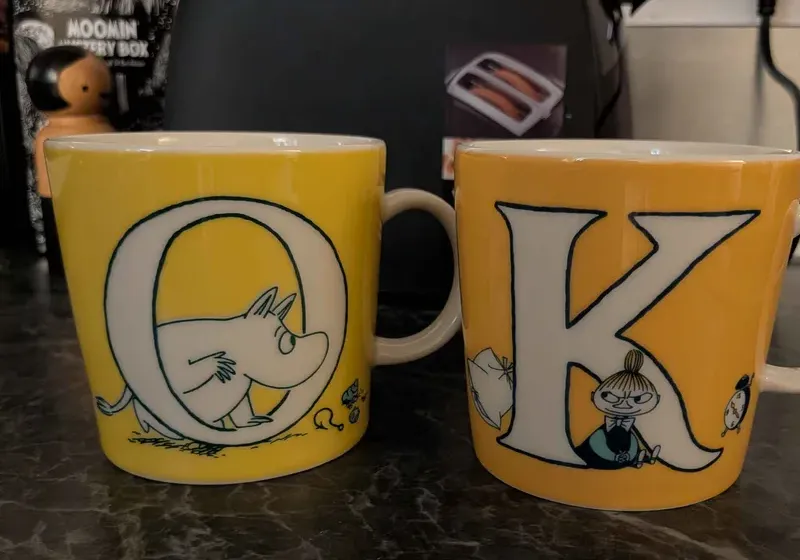
“OK. Okay?! O.K? Okey!”
Which is your pick when typing it out? Have you ever paused to think about it?
You most likely write it and say it out loud many times a day. But it’s almost so automatic, quick and common that it’s not really something to think about, right?
Well, I’ve been thinking about the humble OK a lot, while reading Bill Bryson’s popular book on the English language. In it, he talks about the etymology of certain words. And so I discovered that we actually don’t have a consensus on where the word originates.
Yet, ‘okay’ is used in so many different languages, and it’s probably up there as the most commonly understood word anywhere. Indeed, I’ve witnessed conversations where the ‘locals’ and ‘the tourists’ have had full conversations just saying ‘O.K’ at each other in slightly different tones.
Such a humble word that can mean anything from simple acceptance to some serious doubting.
And while the meaning often comes across clearly in spoken conversation, the way we read into a written ‘okay’ is quite a different story.
How would you feel if a partner responded to your text saying you’re delayed in traffic with an ‘OK’? Would it feel different if it was written ‘okey’? What if it was your child? Parent? Friend?
When we read things, we often add our own little storytelling to it.
The more we know — or think we know — about the person typing, the more we’re likely to read into things we think they may or may not actually say. The exclamation marks, the brevity or length of sentences. They can mean a lot, or very little.
But we also do this with any copy we read.
Depending on the day, I’ve stared at the exact same ads on the London Tube and gotten a completely different vibe from them.
Sometimes the joke lands and makes me chuckle. But if it’s a hot, busy day and I haven’t slept at all, I’m sure to stare at it and think how on earth these people have jobs I don’t actually want anyone to get fired.
It’s quite an interesting but humbling thing to remember when you’re writing content. I can lay out all my hopes and dreams clearly to guide my writing. The intentions and objectives laid bare. But I don’t control the narrative at the end of the day.
The beauty is that a person reading will have their current mood, their favourite words, their own hopes and dreams influencing what they end up drawing from my words. The words that I picked were based on my vision, mood, favourite words and perhaps those of my clients.
Large language models pick words based on probability. Not feeling or the day’s mood. They calculate the likelihood of this OK being followed by a question mark.
And people often say that they feel AI text is ‘soulless’. And while I’m not quite sure how good we actually are at telling the difference between ‘real’ and AI writing, I don’t think it’s even worth comparing which is ‘better’.
To me it’s a more fundamental question of connection.
Words tell us something about us who are reading them and the person who chose to use them.
And I think that’s the real beauty of the OK. No matter how I type it or the tone I use to say it. You’ll get it, whatever it ends up being. So, perhaps as long as we keep writing, it’ll all be OK in the end.